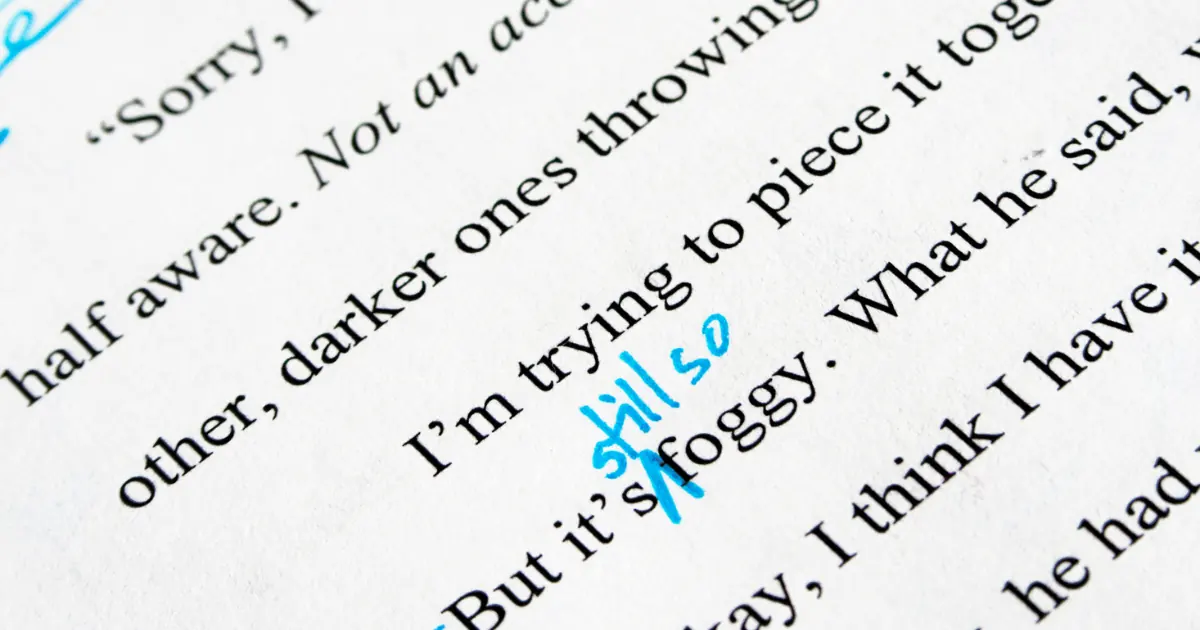


Revising your novel is a skill we’re rarely taught, yet we all have to do it if we want to share our story. It’s the final part of the process, the one that turns an early draft into a finished manuscript we can share with readers, agents or publishers. Most of us learn it the hard way, through trial and error, which can leave us frustrated and exhausted.
You can easily spend weeks or months revising your manuscript, only to realise you still don’t know what isn’t working or how to fix it. To save you some of that time (and a few headaches), here are the three most common mistakes to avoid when revising your novel, and what to do instead.
1. Skipping the cool-off period
In our enthusiasm to finish the story, we often plunge into revising right after we finish drafting. The problem is that we’re still too close to the story and too much in love with its darlings. Without enough critical distance, we can’t see the flaws or the room for improvement. If we revise too soon, we approach the story as its creator rather than as an editor would.
To get that critical distance, it’s important to let the manuscript cool off. For a novel, this might be anywhere between four and eight weeks. During that time, we forget about the story and work on something else, so we return to it with a critical eye and an improved skillset, thanks to the experience we’ve gained in the meantime.
What to do instead
Put the manuscript away and give yourself a set date to come back to it. I call this period the secret to better writing because it works wonders for your manuscript. It also gives you time to rest, so you have the energy to go back to the story and make it work.
2. Revising from start to finish
The most common pitfall (and I know it well, because I’ve fallen into it many times) is to start revising at the beginning and work through the chapters in the order they were written.
Early drafts are where we tell the story to ourselves. That’s why it’s important to address the big picture first and make sure the story works, the character arc is complete and there’s a strong cause-and-effect trajectory before we start fiddling with sentences.
A linear approach works in the final phase, when we’re polishing the prose and it’s all about the beauty of the sentences. If we try it early on, the sheer amount of work will wear us out. By the time we get past the middle and realise there are a few big issues to fix, we might be tempted to give up altogether. A linear revision tends to leave you with beautifully polished opening chapters and a tangled mess of storylines and characters screaming in your ear.
What to do instead
Revise in stages. Address the story and structure first, then move on to the scene level, and finally polish the sentences. This way your efforts aren’t wasted, and you won’t spend hours polishing words that will get cut in the next draft anyway.
3. Asking for feedback too soon
When we know something isn’t working but can’t pinpoint what, it’s tempting to ask other readers what they think, hoping they’ll give us the critical insight we need to fix the story.
Because it’s our story, though, we need to know first what it’s about and make it as good as we can before we let other people in. If we ask for feedback before we understand what the story wants to say, we risk losing it to someone else’s interpretation and letting others define what our story is about.
A good editor or coach will always ask about your understanding of the story and your vision for it before giving feedback. That conversation matters, because feedback is only useful when it’s measured against what you’re trying to achieve.
What to do instead
Before you revise, answer the key questions about your story. They’ll give you a solid understanding of what you’re writing and a foundation to build on. Once you know what your story is about, other readers’ feedback becomes a tool for checking whether it works, rather than a vote on what it should be.
To learn more about when (and whom) to ask for feedback, read my post on feedback: Tackling Feedback. Or grab Story Pulse to get the fundamental questions you need to answer before revising, so you cover the basics.
Revise with a plan
Revision gets far less overwhelming once you know what to tackle first. Give your manuscript time to cool off, fix the big picture before the sentences, and get clear on what your story is about before you invite other voices in. That alone can save you months of going round in circles.
If you’d like to go deeper, my free revision strategy session walks you through a practical plan to take your manuscript from early draft to finished story.