





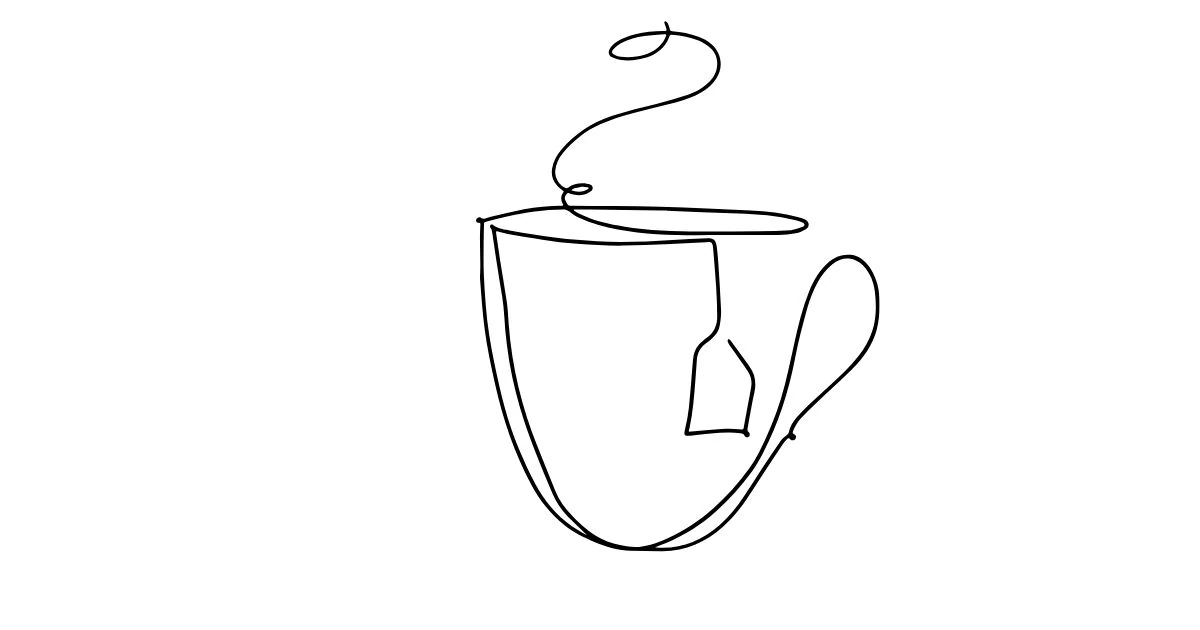
There’s a particular kind of reading pleasure that comes from a single, perfectly chosen detail. A character who straightens picture frames in other people’s houses. A kitchen that smells of burnt toast and old arguments. A man who still uses his late wife’s coffee mug, every morning, without thinking about it. None of these things need explaining – broad strokes are enough to pain the picture and let the reader fill in the rest.
That’s the power of a well-chosen detail. And it’s also, when handled carelessly, the source of one of the most common problems I see in manuscripts.
What details are actually for
Details aren’t decoration. The best ones are doing at least one of several jobs: revealing character, reinforcing theme, grounding a reader in a setting, or pointing quietly at something that matters. A character who notices the price tags on everything tells us something about their relationship with money, or scarcity, or status. A recurring image of locked doors in a story about a woman trying to leave her marriage isn’t accidental. A childhood bedroom described through the things that are missing rather than the things that are there can carry an entire backstory in a paragraph.
When a detail is doing that kind of work, it earns its place. When it isn’t, it becomes noise.
The seasoning problem
Here’s a useful way to think about it. Details are seasoning, not sauce. A pinch of the right thing transforms a dish. Too much of anything, even something good, overwhelms everything else. Stephen King puts it plainly in On Writing:
‘For me, good description usually consists of a few well-chosen details that will stand for everything else.’
Stephen King in On Writing: A Memoir of the Craft
A few. Not many or all of them. A selection.
This is where writers sometimes run into trouble, not because they lack the ability to observe and render the world, but because they’re generous with it. They’ve noticed everything, and they want the reader to notice it too. The result is a description that bogs the story down, pulling the reader’s attention away from what actually matters.
The trick isn’t to describe less but to choose well.
Showing the difference
Consider two versions of the same moment. A detective arrives at a crime scene.
Version 1: ‘The room was large, with high ceilings and pale yellow walls. There was a sofa against one wall, a coffee table in the centre with a half-empty glass of water on the edge, a bookshelf filled with paperbacks, a television on a stand, a window with the curtains half-drawn, and a lamp in the corner that was still on.’
Version 2: ‘The lamp in the corner was still on. On the coffee table, a half-empty glass of water on the edge. Whoever had been here last hadn’t expected to leave.’
The first version gives you everything. The second gives you two details and a conclusion that the reader reaches themselves. One describes a room, the other builds atmosphere.
The details in the second version aren’t random, instead they show a movement, an interrupted routine, they hint that something might have gone wrong. Every detail earns its place by pointing at the story.
How to audit your own details
When you’re revising, it’s worth pausing at your descriptive passages and asking a few honest questions. What is this detail doing? Is it revealing something about the character, the setting, or the theme? Is it pointing at something that matters to the story? Or are you simply giving stage directions and describing the setting?
Accuracy doesn’t cut it – a detail can be true and still be unnecessary. If a detail isn’t doing a job, cut it. If it could be doing a better job with a small adjustment, make that adjustment. And if you find yourself unsure which details to keep, start with the ones that would change something if they were removed. Those are the ones that belong.
The goal isn’t a sparse page or a full one. It’s a precise one, where every detail chosen is chosen on purpose, and the reader feels the difference, even if they can’t say why.